



KENYA: Dangote’s $17 Billion Lamu Refinery Gamble Overview
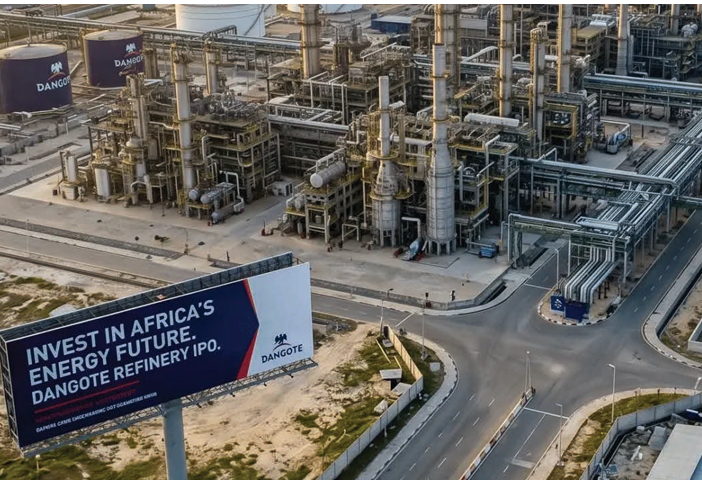
The newly launched Dangote East Africa Oil Refinery, a mega-industrial power house designed to transform Lamu a quiet World Heritage backdrop into East Africa’s premier energy and logistics nexus.
Backed by Nigerian billionaire Aliko Dangote and integrated into Kenya’s broader LAPSSET (Lamu Port-South Sudan-Ethiopia Transport) Corridor, the refinery project represents a monumental investment in African private capital.

- World-Scale Capacity: Operating at an extraordinary capacity of 700,000 barrels of crude per day, the single-train facility rivals Dangote’s flagship Lekki refinery in Lagos.
- Slashing Import Bills: East Africa currently burns through roughly $20 billion annually importing refined fuel. The Lamu facility is built to achieve total regional energy self-sufficiency, supplying refined petroleum to Kenya, Tanzania, Uganda, South Sudan, Rwanda, Burundi, Ethiopia, Somalia, and the Democratic Republic of Congo.
- Powering the Grid: Beyond fuel, the refinery complex is projected to generate 1,000 MW of electricity, dispatching half of its output 500 MW straight into Kenya’s national power grid to stabilize electricity across the country.
- Job Creation: Construction alone is expected to demand 60,000 workers over its multi-year build, triggering an urgent push for local technical and vocational training to ensure regional youth reap the rewards.
The refinery does not exist in a vacuum; it serves as the catalyst for the comprehensive New Lamu City Master Plan. The spatial design maps out a modern metropolis built around the 23-berth deep-water Lamu Port while preserving the delicate cultural and ecological balance of the archipelago.
  +-----------------------------------------------------------------------+
  |                          NEW LAMU CITY HUB                            |
  |                                                                       |
  |   [ Deep-Water Port ] <----> [ Dangote Refinery & Petrochemicals ]    |
  |          |                                   |                        |
  |          v                                   v                        |
  |   [ LAPSSET Pipelines ]              [ 1,000 MW Power Plant ]          |
  |    (Turkana / Ethiopia)               (500 MW to National Grid)        |
  |          |                                   |                        |
  |          +-----------------+-----------------+                        |
  |                            |                                          |
  |                            v                                          |
  |               [ Special Economic Zones (SEZs) ]                       |
  |               (Fertilizer, Steel, Light Manufacturing)                |
  +-----------------------------------------------------------------------+
Key Highlights of the Master Plan:
- Industrial Heavyweights: Spanning 10,000 acres of industrial allocations, the complex integrates a 2,500-acre refinery footprint alongside dedicated Special Economic Zones (SEZs) for secondary petrochemical manufacturing, including plastics, steel, and fertilizer production.
- Transportation Overhaul: To link the mainland with inland regional markets, the city structure incorporates a new international airport, cargo railway stations, highways, and specialized product pipelines reaching into Ethiopia and South Sudan.
- Defense & Security: Recognizing historical security vulnerabilities, the plan integrates a dedicated naval base for the Kenya Navy within Manda Bay to safeguard vital maritime routes and boost regional stability.
- Ecological Guardrails: To protect Lamu’s World Heritage sites and fragile mangrove marine ecosystems, the plan embeds strict environmental boundaries: a 1 km industrial vegetation buffer zone designed as a carbon sink, alongside smart agricultural zones using hydroponics and aeroponics to feed the growing population.

As cranes rise over Manda Bay, the true test for New Lamu City will be maintaining harmony between two worlds. On one side of the channel lies 700 years of Swahili heritage, eco-tourism, and traditional artisanal fishing. On the other sits an unprecedented $17 billion industrial giant capable of shifting Kenya from a fuel-dependent importer into an African energy titan.
If executed to plan, Lamu will not just be a site of historical memory, but the self-sustaining, energy-sovereign heart of the East African economy.
